Most Important Shinto Shrines in Japan
This post can contain affiliate links, which means that we may receive a small commission if you make a purchase using these links.
Facts & Figures
Shinto, a deeply rooted Japanese religion, emphasises harmony between humans and nature. The word Shinto translates roughly as "the Way of the Gods" or, more literally, "the Way of the Kami". Typically, a kami (deity or spirit) is enshrined at a shrine, where people come to worship. This list highlights five of Japan’s most significant Shinto shrines. These shrines are connected to important deities, the Imperial family, ancient traditions, Japanese history, and exceptional architecture. Each represents a unique aspect of Shinto culture, offering a window into Japan’s spiritual heritage.
 Get Your Pass Now and Save!
Overview of the Most Important Shinto Shrines in Japan
1. Ise Grand Shrine, Mie Prefecture
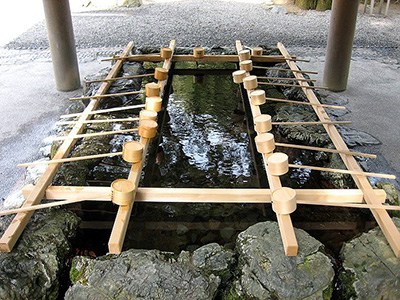
The Ise Grand Shrine (Ise Jingu) is the most sacred place in Shinto religion in Japan. It is also called the Soul of Japan. Ise-jingu is visited by approximately 7.5 million pilgrims and tourists every year. Naiku (Inner Shrine) was founded about 2000 years ago. Geku (Outer Shrine) dates back about 1500 years.
Read More
2. Fushimi Inari-Taisha, Kyoto
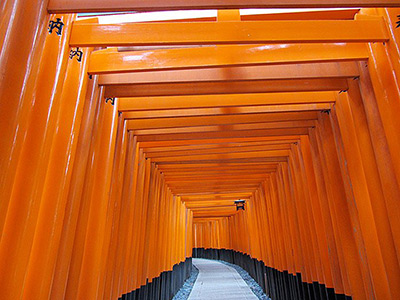
Fushimi Inari Taisha (Fushimi Inari Shrine) is one of the most popular Shinto shrines in all of Kyoto. The shrine is famous for its endless arcades of thousands of vermilion torii gates along the 4km pathway up the sacred mountain Inari (233 meters). The head shrine of Inari represents approx. 40000 Inari shrines throughout Japan.
Read More
3. Izumo Taisha, Shimane Prefecture
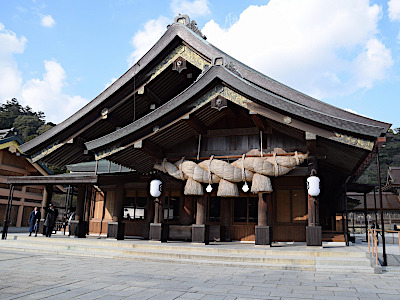
Izumo Taisha is located in Izumo, Shimane Prefecture, and is one of Japan’s most important and oldest Shinto shrines. The main deity enshrined there is Okuninushi no Okami, who, according to Japanese mythology, played a central role in creating the land of Japan.
Read More
4. Meiji Shrine, Tokyo
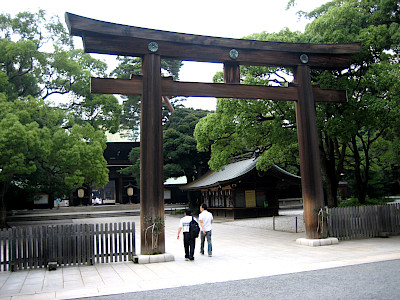
Set in a forest of over 100000 trees, Meiji Shrine is Tokyo’s most important Shinto site. Thousands of visitors pass through its towering torii gates each day into a peaceful world dedicated to Emperor Meiji (1852 - 1912) and Empress Shoken (1849 - 1914). It is also one of the biggest tourist attractions in the capital.
Read More
5. Itsukushima Shrine, Miyajima
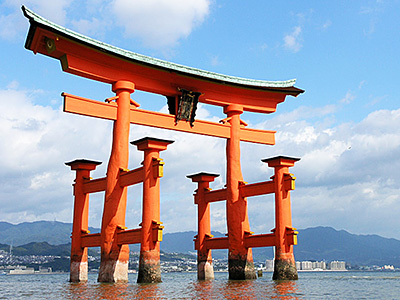
The Itsukushima Shrine is a Shinto Shrine and UNESCO World Heritage Site on Miyajima, a small island near Hiroshima. The famous torii gate is known all over the world. The island itself has a beautiful forest and parks with free-rooming deer.
Read More